Webapp
Webapp
Webapp
Almost a startup - Feesless Web App
Services
Services
Services
UX/UI design
Visual Identity
Problem solving
UX/UI design
Visual Identity
Problem solving
UX/UI design
Visual Identity
Problem solving
Year
Year
Year
2022
2022
2022
Overview
Overview
Overview
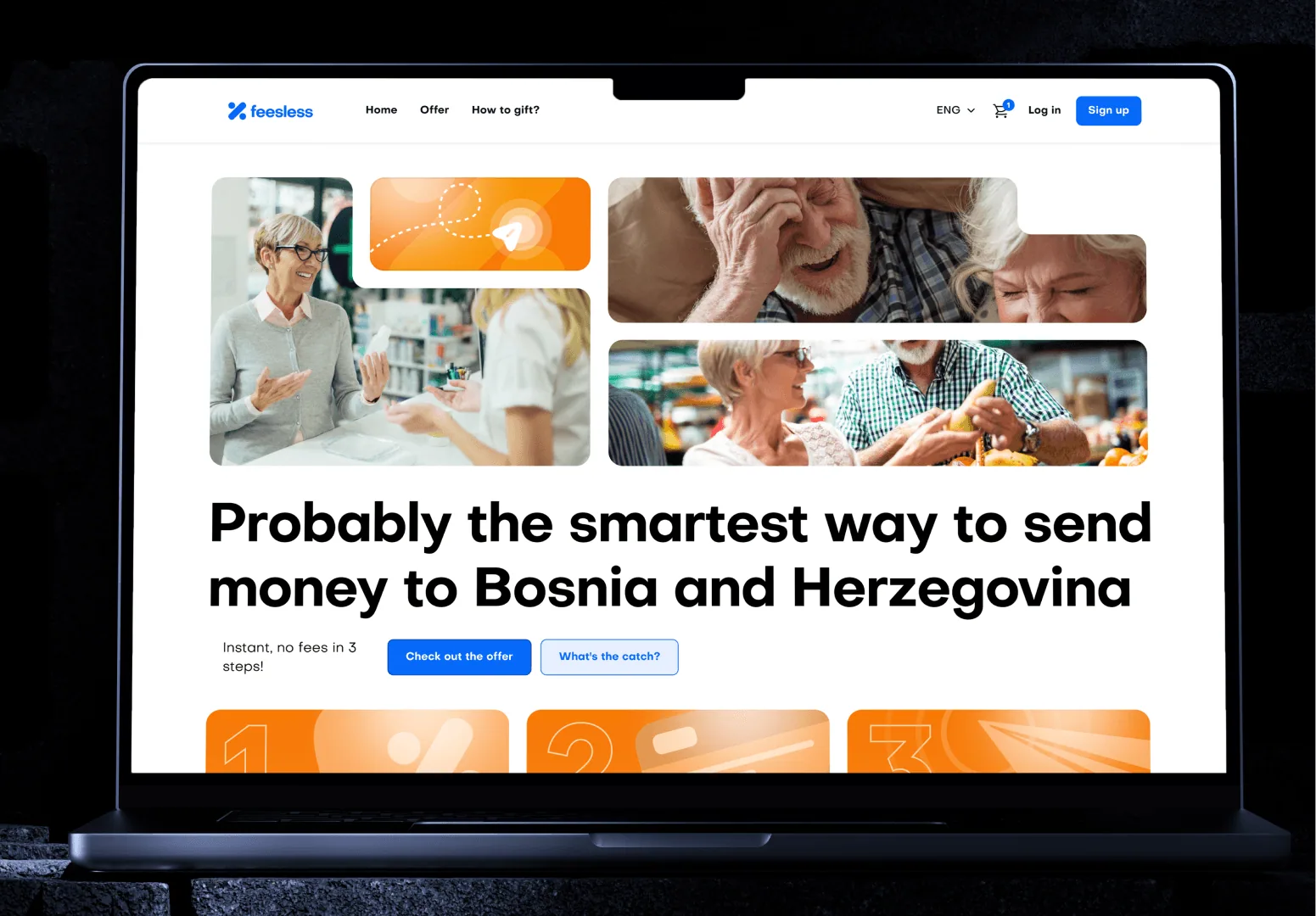
It all started at the Greenback Hackathon with a challenge: design and develop an innovative solution in 24 hours to address the remittance problem. Our research revealed that most recipients spend the money they receive on essentials such as groceries, medicine, healthcare, and gifts. My colleague, Meris Imamović, and I developed a simple but impactful idea: instead of sending money through traditional channels and paying high transfer fees, people living abroad could directly purchase digital coupons for the exact goods and services their families need. This approach eliminates unnecessary commissions and ensures that support goes straight to its intended purpose.
Challenge
Challenge
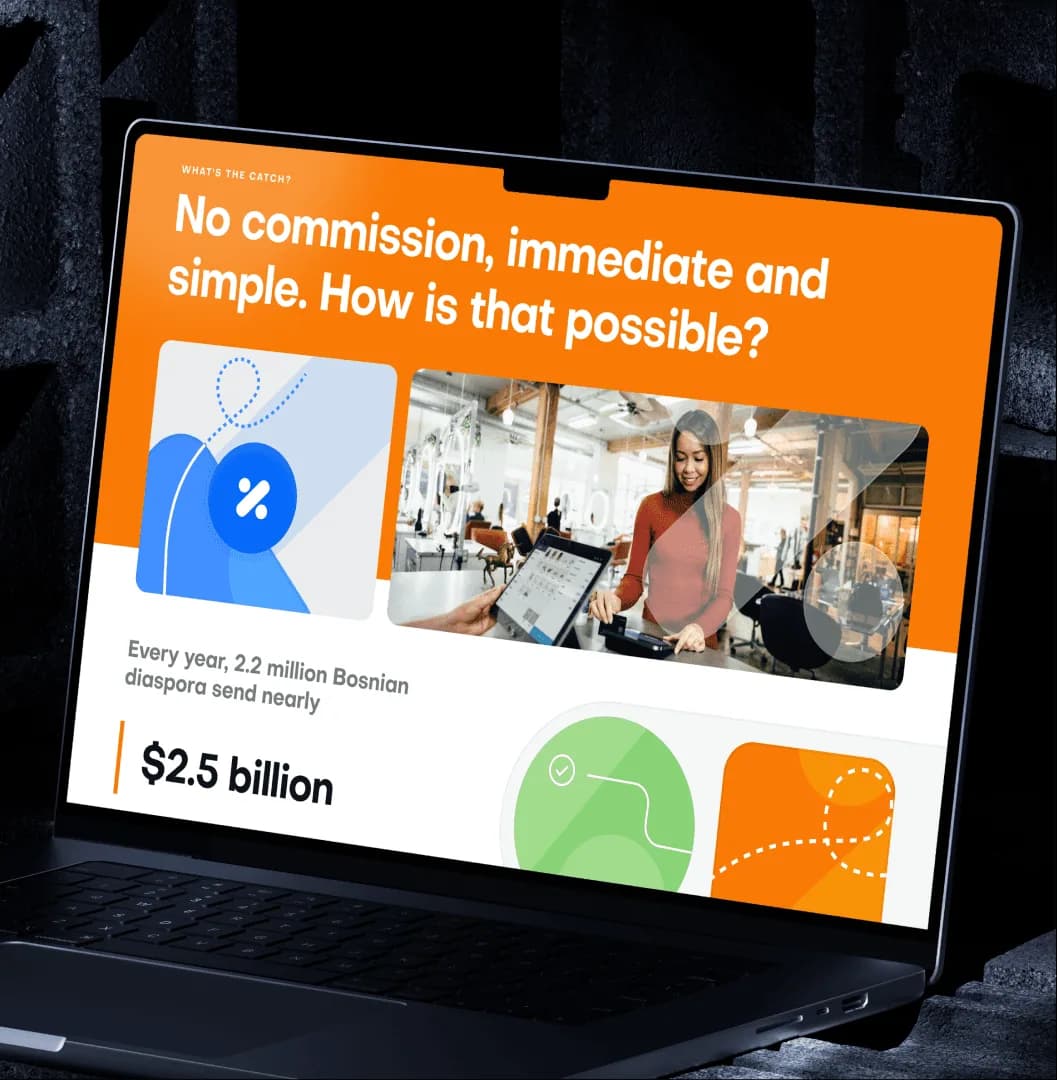
Every year, more than 2.2 million Bosnians living abroad send approximately $2.5 billion back home. With an average transfer commission of 7.5%, nearly $200 million is lost annually, money that could have gone directly to families rather than fees.
Despite the scale of these remittances, the process remains problematic. Transfer fees are high, delivery is often slow, and recipients usually have to pick up cash in person. There is little transparency, and Bosnia and Herzegovina still lacks modern, fully digital solutions for sending and receiving support. As a result, helping family members back home becomes needlessly expensive, inconvenient, and inefficient for everyone involved.
Every year, more than 2.2 million Bosnians living abroad send approximately $2.5 billion back home. With an average transfer commission of 7.5%, nearly $200 million is lost annually, money that could have gone directly to families rather than fees.
Despite the scale of these remittances, the process remains problematic. Transfer fees are high, delivery is often slow, and recipients usually have to pick up cash in person. There is little transparency, and Bosnia and Herzegovina still lacks modern, fully digital solutions for sending and receiving support. As a result, helping family members back home becomes needlessly expensive, inconvenient, and inefficient for everyone involved.
Research
Research
At the hackathon, we were given a research paper from The World Bank containing extensive data to analyze. The most interesting finding was that most recipients spend the money they receive on essentials such as groceries, medicine, healthcare services, and gifts. This information led us to our solution.
Another interesting discovery was that people were sending large amounts of cash via buses (from Germany, Austria, and other nearby countries) with low or no cost at all. Finally, we learned that some people simply don’t have bank accounts, but they do own smartphones.
At the hackathon, we were given a research paper from The World Bank containing extensive data to analyze. The most interesting finding was that most recipients spend the money they receive on essentials such as groceries, medicine, healthcare services, and gifts. This information led us to our solution.
Another interesting discovery was that people were sending large amounts of cash via buses (from Germany, Austria, and other nearby countries) with low or no cost at all. Finally, we learned that some people simply don’t have bank accounts, but they do own smartphones.
The next step was identifying the main pain points users face:
High Transfer Fees
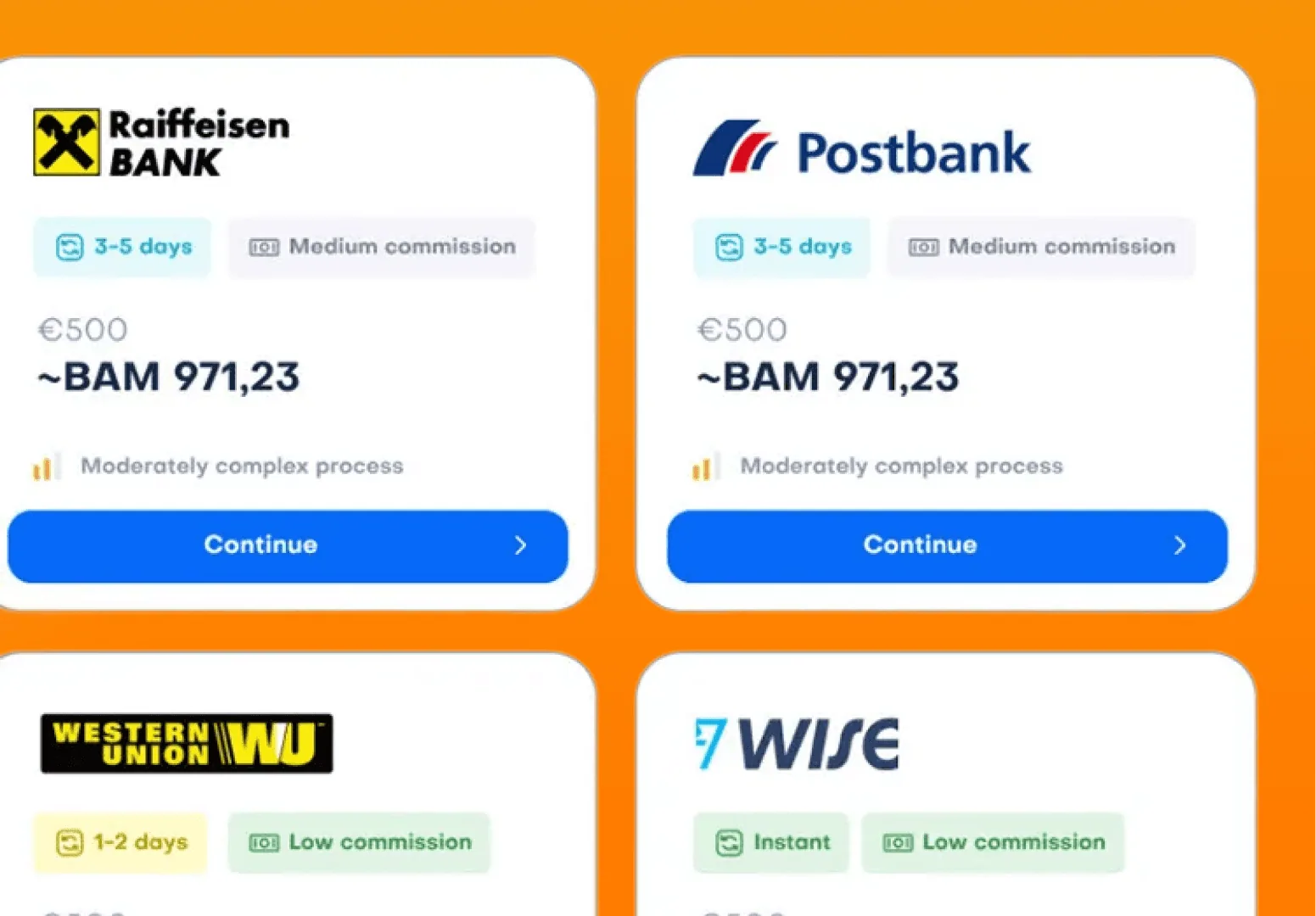
Sending money through traditional channels (Western Union, MoneyGram, bank transfers, etc.) often involves high commissions, especially for smaller amounts. For many people abroad, this makes supporting their families unnecessarily expensive.
Slow or Inconvenient Processes
Depending on the provider, recipients may need to wait in line at a physical branch, show documents, or rely on banks with limited working hours. This creates friction, especially for older recipients or people in rural areas.
Lack of Transparency
Senders often have little control over how the money is spent, and recipients sometimes face unpredictable exchange rates or hidden service fees upon collection.
Limited Access to Modern Digital Solutions
While digital remittance tools exist globally, Bosnia and Herzegovina does not yet have widespread adoption of fully digital, instant transfer platforms or strong integration between foreign fintech services and local institutions. This often forces people to rely on traditional, more expensive cash-based channels.
Exchange Rate Losses
Recipients often lose money due to unfavorable exchange rates, currency conversion fees, or double conversions depending on the provider.
The next step was identifying the main pain points users face:
High Transfer Fees
Sending money through traditional channels (Western Union, MoneyGram, bank transfers, etc.) often involves high commissions, especially for smaller amounts. For many people abroad, this makes supporting their families unnecessarily expensive.
Slow or Inconvenient Processes
Depending on the provider, recipients may need to wait in line at a physical branch, show documents, or rely on banks with limited working hours. This creates friction, especially for older recipients or people in rural areas.
Lack of Transparency
Senders often have little control over how the money is spent, and recipients sometimes face unpredictable exchange rates or hidden service fees upon collection.
Limited Access to Modern Digital Solutions
While digital remittance tools exist globally, Bosnia and Herzegovina does not yet have widespread adoption of fully digital, instant transfer platforms or strong integration between foreign fintech services and local institutions. This often forces people to rely on traditional, more expensive cash-based channels.
Exchange Rate Losses
Recipients often lose money due to unfavorable exchange rates, currency conversion fees, or double conversions depending on the provider.
Solution
Solution
Although we had all the data and identified the main pain points people face, we were quite far from a solution. On one side, you have banks and large systems that have already invested millions; on the other, you have bus drivers or friends who travel from time to time and bring cash at no cost. After spending a few hours brainstorming and going through ten failed ideas, we finally found the winning one.
We knew that when you buy products online (even if you are in Germany or anywhere else in the world), you pay $100 and receive $100 worth of goods. Although there are hidden costs, users don’t feel them because online stores give up 1.5–3% of their margins to cover payment processor fees. So, if we know what people spend the money on after they receive it, why not cut out intermediaries (in this case, banks) and send the money directly to grocery stores, pharmacies, healthcare institutions, etc.? Why not create coupons for these things?
This was a win-win solution for everyone:
For senders (people abroad):
Lower or zero transfer fees compared to traditional remittances.
More control over how their support is spent, ensuring it goes toward essentials.
Faster and simpler process = no bank queues, no delays.
For recipients (people at home):
Instant access to goods and services without the hassle of withdrawing cash.
Safe, secure, and reliable—no risk of money getting lost or misused.
Convenience through digital coupons that can be used in everyday, trusted places.
For partner businesses (stores, pharmacies, clinics):
Guaranteed customer traffic, driven by coupon holders who can only spend at partnered locations.
Increased revenue and repeat purchases, as coupon users often buy additional items.
Brand visibility within an international user base sending support home.
We thought we were geniuses (it turned out we were not, but it was a nice feeling). How had nobody done this before? And yes, we won the hackathon, but then the real story begins.
After winning the Greenback Hackathon, we tried turning our idea into a real product.
We gathered the team and started working on it. We redesigned our initial design from the competition, simplified the whole process, and we reduced the number of unnecessary functionalities. We also defined the stages of product development and did more interviews with senders and recipients to understand their needs.
Although we had all the data and identified the main pain points people face, we were quite far from a solution. On one side, you have banks and large systems that have already invested millions; on the other, you have bus drivers or friends who travel from time to time and bring cash at no cost. After spending a few hours brainstorming and going through ten failed ideas, we finally found the winning one.
We knew that when you buy products online (even if you are in Germany or anywhere else in the world), you pay $100 and receive $100 worth of goods. Although there are hidden costs, users don’t feel them because online stores give up 1.5–3% of their margins to cover payment processor fees. So, if we know what people spend the money on after they receive it, why not cut out intermediaries (in this case, banks) and send the money directly to grocery stores, pharmacies, healthcare institutions, etc.? Why not create coupons for these things?
This was a win-win solution for everyone:
For senders (people abroad):
Lower or zero transfer fees compared to traditional remittances.
More control over how their support is spent, ensuring it goes toward essentials.
Faster and simpler process = no bank queues, no delays.
For recipients (people at home):
Instant access to goods and services without the hassle of withdrawing cash.
Safe, secure, and reliable—no risk of money getting lost or misused.
Convenience through digital coupons that can be used in everyday, trusted places.
For partner businesses (stores, pharmacies, clinics):
Guaranteed customer traffic, driven by coupon holders who can only spend at partnered locations.
Increased revenue and repeat purchases, as coupon users often buy additional items.
Brand visibility within an international user base sending support home.
We thought we were geniuses (it turned out we were not, but it was a nice feeling). How had nobody done this before? And yes, we won the hackathon, but then the real story begins.
After winning the Greenback Hackathon, we tried turning our idea into a real product.
We gathered the team and started working on it. We redesigned our initial design from the competition, simplified the whole process, and we reduced the number of unnecessary functionalities. We also defined the stages of product development and did more interviews with senders and recipients to understand their needs.
The failure
The failure
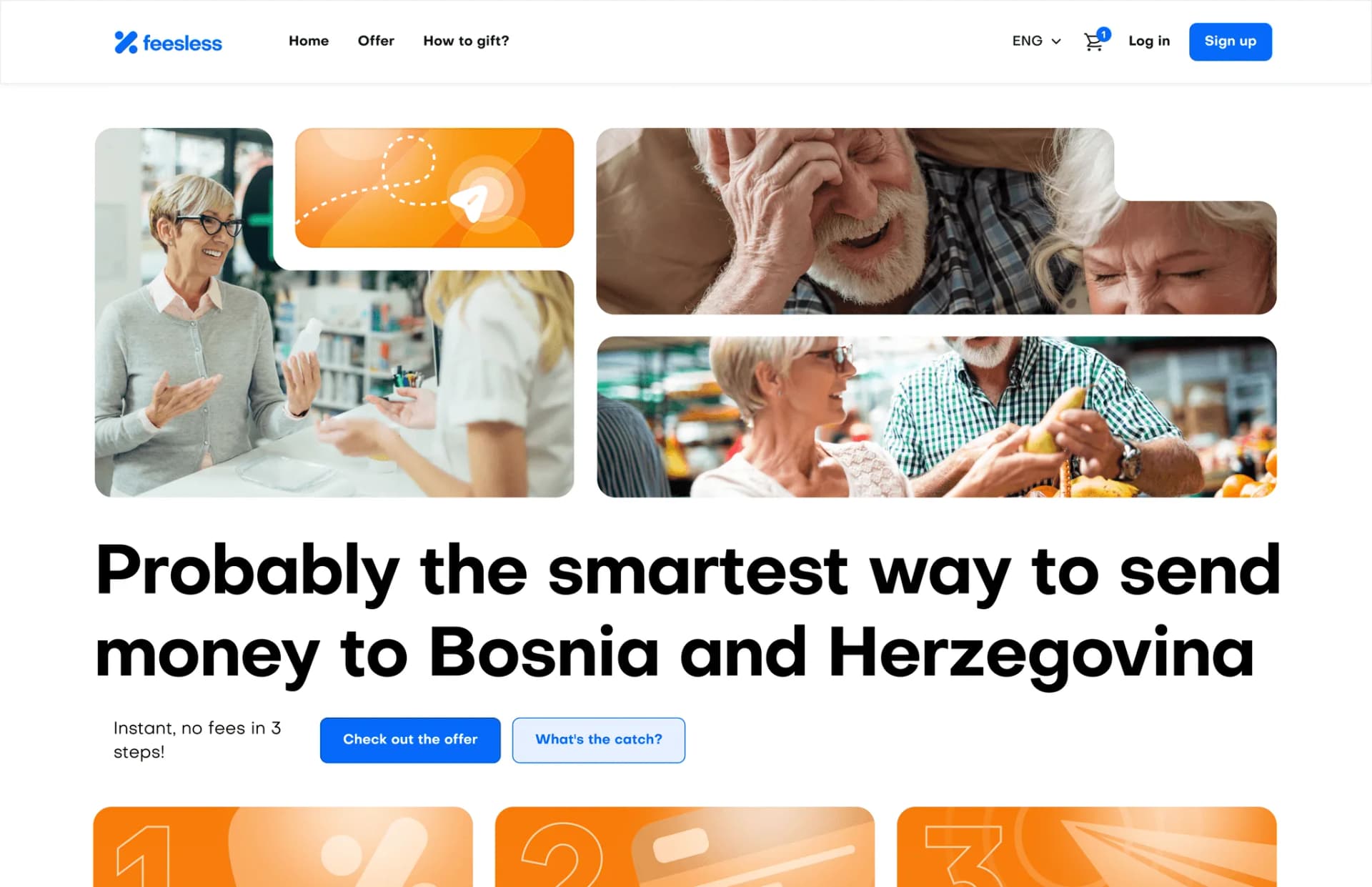
We designed a fully functional prototype in Figma that we could use to present our idea to partners and clients.


We scheduled meetings with Konzum, Mercator, and Bingo (the largest grocery chains in Bosnia), and we were ready to pitch.
And guess what? They weren’t interested. They didn't want to invest in something outside their core business or sacrifice their margins. We even offered exclusive partnerships to get the project off the ground, but we still received rejections.
Since the Bosnian market it isn’t highly developed and there are only a few major players, our project failed due to their rejection. We didn't want to give up easily, so we approached smaller businesses, but their owners were quite conservative.
We scheduled meetings with Konzum, Mercator, and Bingo (the largest grocery chains in Bosnia), and we were ready to pitch.
And guess what? They weren’t interested. They didn't want to invest in something outside their core business or sacrifice their margins. We even offered exclusive partnerships to get the project off the ground, but we still received rejections.
Since the Bosnian market it isn’t highly developed and there are only a few major players, our project failed due to their rejection. We didn't want to give up easily, so we approached smaller businesses, but their owners were quite conservative.
Conclusion
Conclusion
Although the project ultimately failed to achieve market adoption, the journey proved far more valuable than the final outcome. Our team uncovered a real, large-scale problem that affects millions of people, validated it through research, and built a solution that genuinely addressed user needs. We created a prototype, tested assumptions, engaged with businesses, and pushed an idea far beyond the hackathon stage.
In the end, the biggest barrier wasn’t the users or the technology. It was the market’s readiness and the willingness of key players to innovate. Even the best user-centric ideas can struggle without an ecosystem that supports change.
Still, this experience reinforced an important lesson: meaningful innovation involves risk, uncertainty, and sometimes failure. But each attempt builds the knowledge, skills, and resilience needed to create better solutions in the future. And for us, this process was a win on its own.
Although the project ultimately failed to achieve market adoption, the journey proved far more valuable than the final outcome. Our team uncovered a real, large-scale problem that affects millions of people, validated it through research, and built a solution that genuinely addressed user needs. We created a prototype, tested assumptions, engaged with businesses, and pushed an idea far beyond the hackathon stage.
In the end, the biggest barrier wasn’t the users or the technology. It was the market’s readiness and the willingness of key players to innovate. Even the best user-centric ideas can struggle without an ecosystem that supports change.
Still, this experience reinforced an important lesson: meaningful innovation involves risk, uncertainty, and sometimes failure. But each attempt builds the knowledge, skills, and resilience needed to create better solutions in the future. And for us, this process was a win on its own.
100%
100%
failed
startup
failed
startup
100%
100%
valuable
experience
valuable
experience
Challenge
Every year, more than 2.2 million Bosnians living abroad send approximately $2.5 billion back home. With an average transfer commission of 7.5%, nearly $200 million is lost annually, money that could have gone directly to families rather than fees.
Despite the scale of these remittances, the process remains problematic. Transfer fees are high, delivery is often slow, and recipients usually have to pick up cash in person. There is little transparency, and Bosnia and Herzegovina still lacks modern, fully digital solutions for sending and receiving support. As a result, helping family members back home becomes needlessly expensive, inconvenient, and inefficient for everyone involved.
Research
At the hackathon, we were given a research paper from The World Bank containing extensive data to analyze. The most interesting finding was that most recipients spend the money they receive on essentials such as groceries, medicine, healthcare services, and gifts. This information led us to our solution.
Another interesting discovery was that people were sending large amounts of cash via buses (from Germany, Austria, and other nearby countries) with low or no cost at all. Finally, we learned that some people simply don’t have bank accounts, but they do own smartphones.
The next step was identifying the main pain points users face:
High Transfer Fees
Sending money through traditional channels (Western Union, MoneyGram, bank transfers, etc.) often involves high commissions, especially for smaller amounts. For many people abroad, this makes supporting their families unnecessarily expensive.
Slow or Inconvenient Processes
Depending on the provider, recipients may need to wait in line at a physical branch, show documents, or rely on banks with limited working hours. This creates friction, especially for older recipients or people in rural areas.
Lack of Transparency
Senders often have little control over how the money is spent, and recipients sometimes face unpredictable exchange rates or hidden service fees upon collection.
Limited Access to Modern Digital Solutions
While digital remittance tools exist globally, Bosnia and Herzegovina does not yet have widespread adoption of fully digital, instant transfer platforms or strong integration between foreign fintech services and local institutions. This often forces people to rely on traditional, more expensive cash-based channels.
Exchange Rate Losses
Recipients often lose money due to unfavorable exchange rates, currency conversion fees, or double conversions depending on the provider.
Solution
Although we had all the data and identified the main pain points people face, we were quite far from a solution. On one side, you have banks and large systems that have already invested millions; on the other, you have bus drivers or friends who travel from time to time and bring cash at no cost. After spending a few hours brainstorming and going through ten failed ideas, we finally found the winning one.
We knew that when you buy products online (even if you are in Germany or anywhere else in the world), you pay $100 and receive $100 worth of goods. Although there are hidden costs, users don’t feel them because online stores give up 1.5–3% of their margins to cover payment processor fees. So, if we know what people spend the money on after they receive it, why not cut out intermediaries (in this case, banks) and send the money directly to grocery stores, pharmacies, healthcare institutions, etc.? Why not create coupons for these things?
This was a win-win solution for everyone:
For senders (people abroad):
Lower or zero transfer fees compared to traditional remittances.
More control over how their support is spent, ensuring it goes toward essentials.
Faster and simpler process = no bank queues, no delays.
For recipients (people at home):
Instant access to goods and services without the hassle of withdrawing cash.
Safe, secure, and reliable—no risk of money getting lost or misused.
Convenience through digital coupons that can be used in everyday, trusted places.
For partner businesses (stores, pharmacies, clinics):
Guaranteed customer traffic, driven by coupon holders who can only spend at partnered locations.
Increased revenue and repeat purchases, as coupon users often buy additional items.
Brand visibility within an international user base sending support home.
We thought we were geniuses (it turned out we were not, but it was a nice feeling). How had nobody done this before? And yes, we won the hackathon, but then the real story begins.
After winning the Greenback Hackathon, we tried turning our idea into a real product.
We gathered the team and started working on it. We redesigned our initial design from the competition, simplified the whole process, and we reduced the number of unnecessary functionalities. We also defined the stages of product development and did more interviews with senders and recipients to understand their needs.
The failure
We designed a fully functional prototype in Figma that we could use to present our idea to partners and clients.

We scheduled meetings with Konzum, Mercator, and Bingo (the largest grocery chains in Bosnia), and we were ready to pitch.
And guess what? They weren’t interested. They didn't want to invest in something outside their core business or sacrifice their margins. We even offered exclusive partnerships to get the project off the ground, but we still received rejections.
Since the Bosnian market it isn’t highly developed and there are only a few major players, our project failed due to their rejection. We didn't want to give up easily, so we approached smaller businesses, but their owners were quite conservative.
Conclusion
Although the project ultimately failed to achieve market adoption, the journey proved far more valuable than the final outcome. Our team uncovered a real, large-scale problem that affects millions of people, validated it through research, and built a solution that genuinely addressed user needs. We created a prototype, tested assumptions, engaged with businesses, and pushed an idea far beyond the hackathon stage.
In the end, the biggest barrier wasn’t the users or the technology. It was the market’s readiness and the willingness of key players to innovate. Even the best user-centric ideas can struggle without an ecosystem that supports change.
Still, this experience reinforced an important lesson: meaningful innovation involves risk, uncertainty, and sometimes failure. But each attempt builds the knowledge, skills, and resilience needed to create better solutions in the future. And for us, this process was a win on its own.
100%
failed
startup
100%
valuable
experience
Other projects
Other projects


From 0 to 100 to support my dad
I created my dad’s brand completely from scratch. The logo, visual identity, copy, website, development, and all advertising.


Probably the hardest thing I did
Since high school I dreamed of running my own business, but I never expected how challenging working for yourself would be.


Designing data for some big names
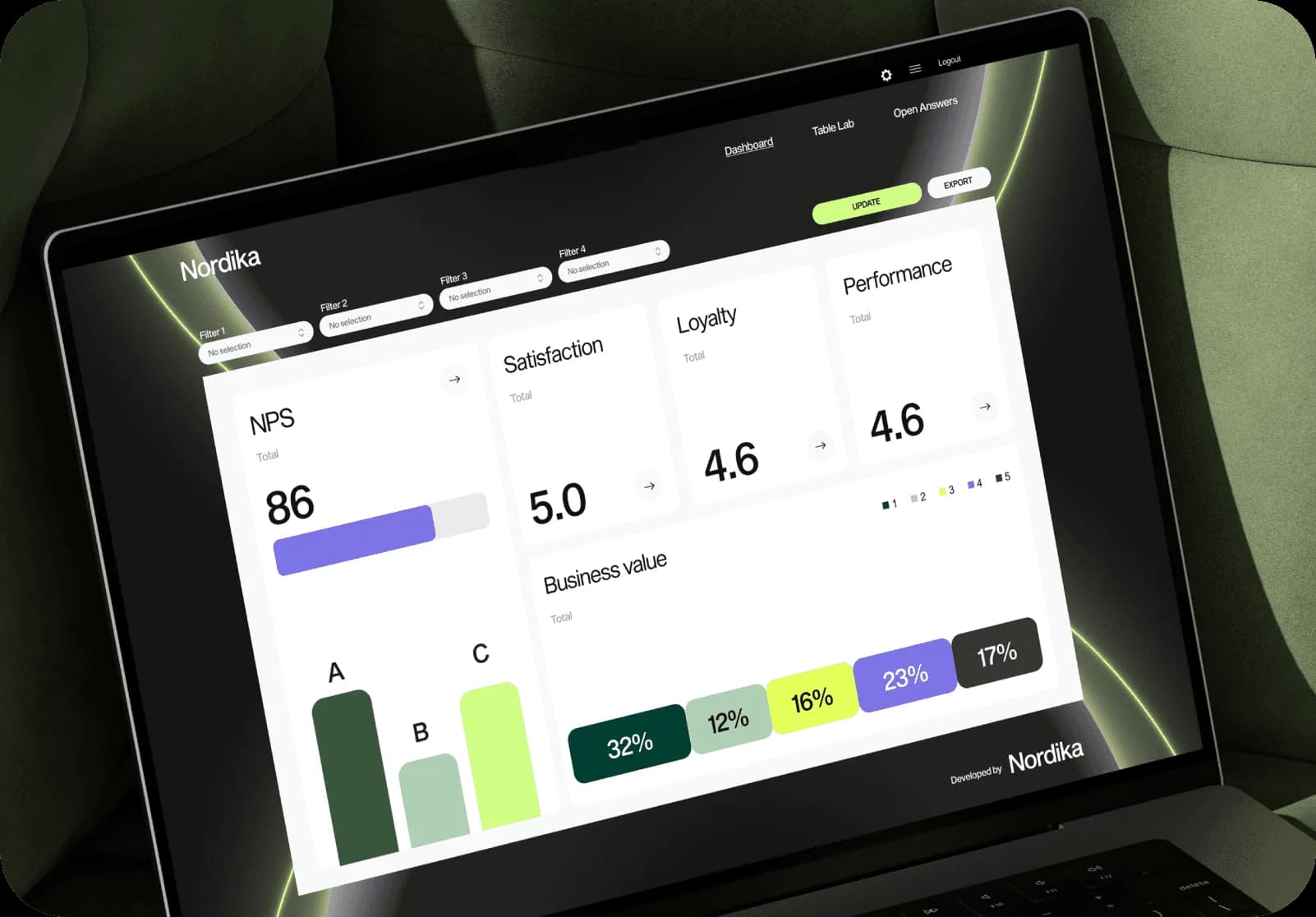
Through Nordika and past work in UX and data visualization, I built dashboards for global brands like DHL, Vodafone, Scandic, and more.
Through Nordika and past work in UX and data visualization, I built dashboards for global brands like DHL, Vodafone, Scandic…
Through Nordika and past work in UX and data visualization, I built dashboards for global brands like DHL, Vodafone, Scandic, and more.
Want to collaborate?
Whether it’s designing something bold, sharing a beer, or exploring a new corner of the world, I’m ready. Drop me a message at info@dejanzonjic.com, and let’s create something amazing!


Do better
every day
Do better
every day
Do better
every day
Do better
every day